The Liberal Case Against Bernie Sanders
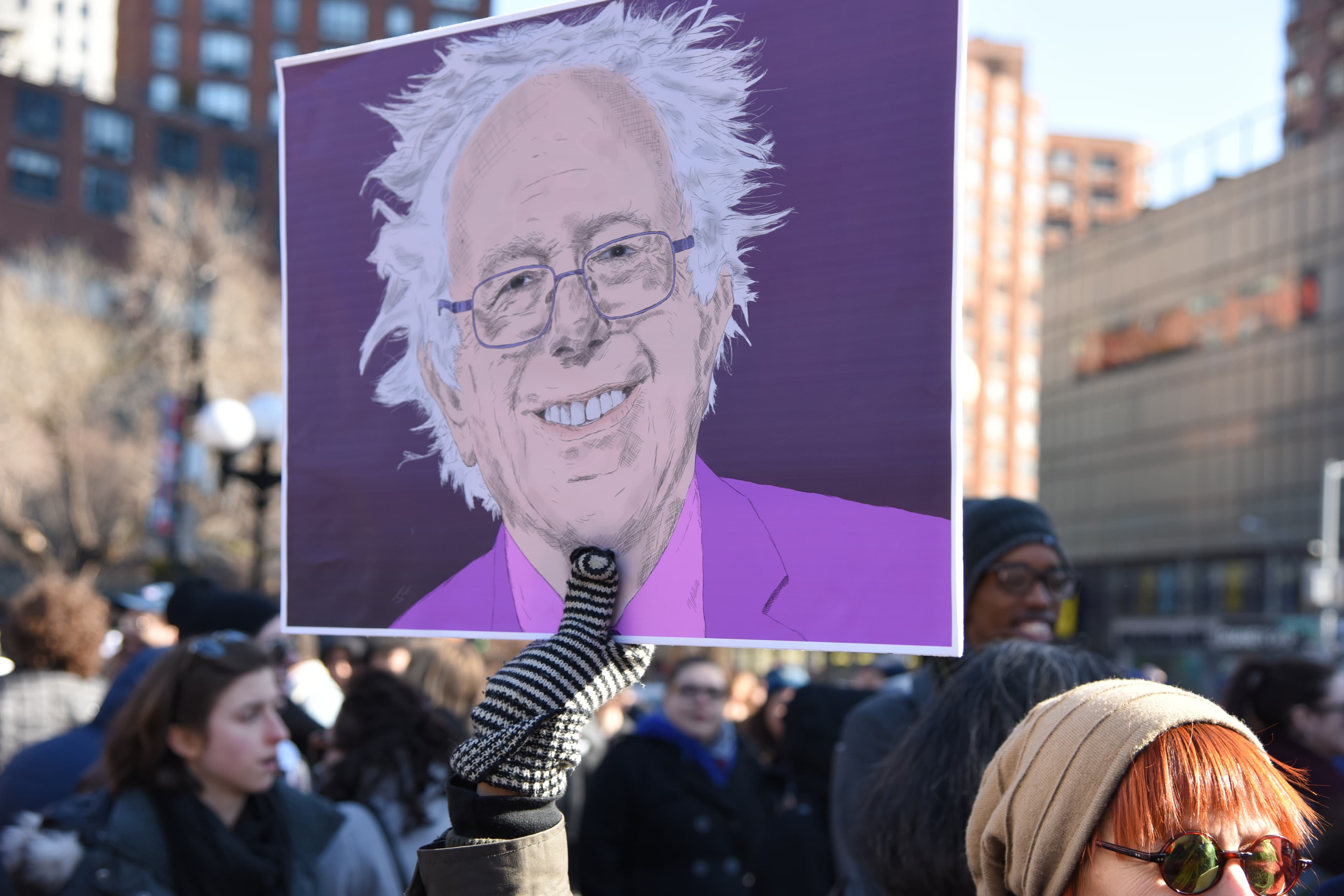
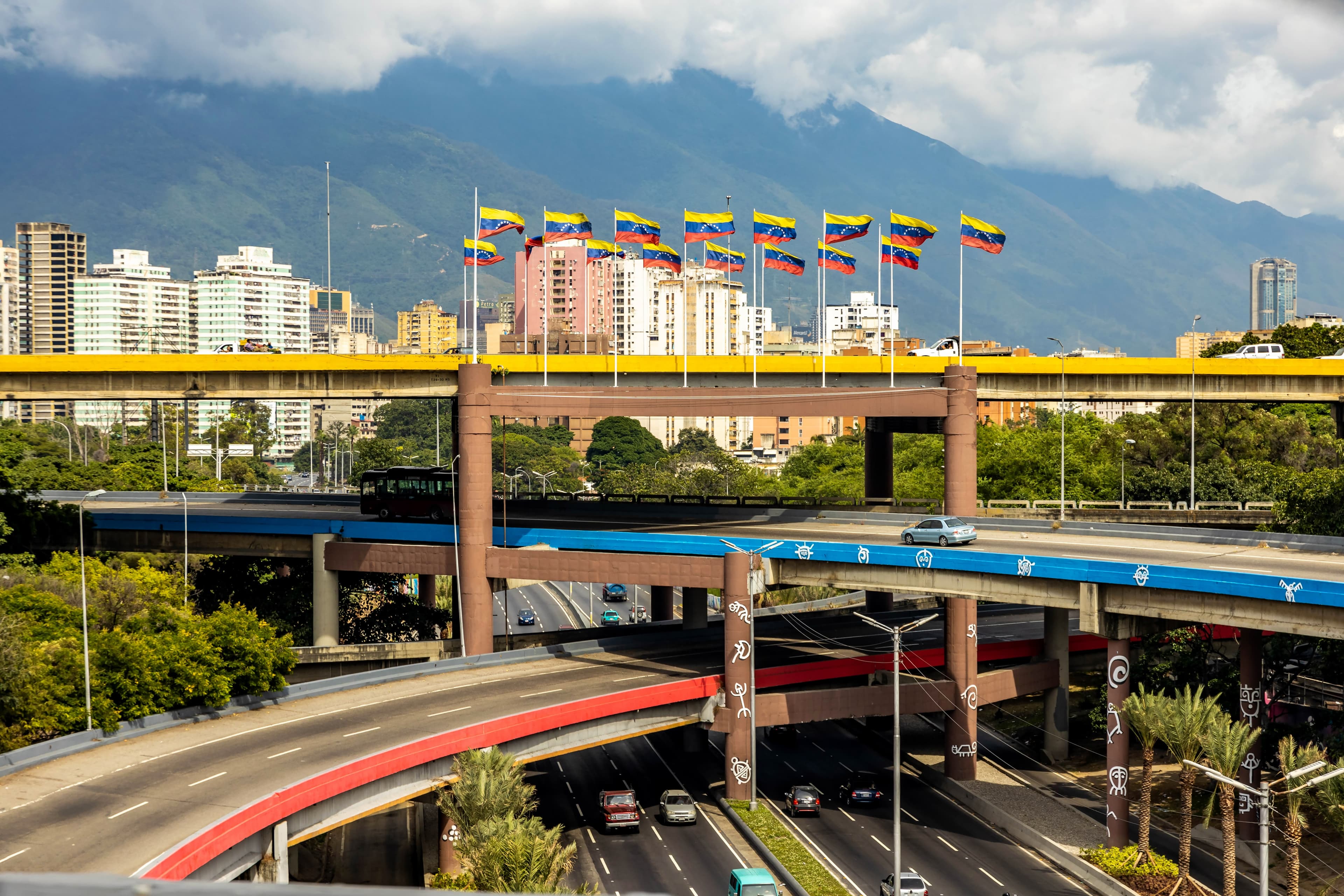
As the race for the Democratic presidential nomination shapes up to be one between the “exciting” revolution and the “reliable” status quo, I can’t shake the feeling that I’ve seen this movie before. I saw it in 2016 when Donald Trump, the anti-establishment populist took over the Republican Party and then the White House. And I also saw it before that, in my home country of Venezuela, where in 1999 an authoritarian socialist who swore he wasn’t an authoritarian socialist got to power and immediately started attacking the country’s institutions, and using the polarized political climate to fundamentally change our cultural norms and expectations. As a Venezuelan-American, I get a lot of criticism from Venezuelans for voting Democrat. They, like an increasing number of concerned Americans, think the Party is fundamentally socialist, and they can’t understand how someone who lived through chavismo would support it at all. I’m a liberal, and believe that while the Party has loud and trendy socialist factions, the moderate wing is in charge, and that Chavez actually has way more in common with Trump than with Nancy Pelosi. The fact that Democrats have rallied around Joe Biden after his South Carolina win demonstrates they are trying to protect the center and realize the danger Sanders represents. They are doing what most moderate Republicans failed to do to stop Trump in 2016. But if Sanders becomes the head of the Democratic Party, I can no longer use that argument. I will become politically homeless. Kind of like the Republicans who refused to support Trump even when the Party at large pretty uniformly fell in line. The “Never Trumpers.” Bernie Bro types look down on these conservatives, people like Mitt Romney and Max Boot, but I think they’ve done the only thing to do when faced with a threat to democracy in your own Party. And the Bernie Sanders movement is definitely a threat to both our culture and democracy, and not because he wouldn’t be able to beat Trump in November. In fact, I think Bernie is probably the only candidate who can put up a fight against Trump’s angry populism. But these elections are about much more than the next four years. Much like Hugo Chavez and Donald Trump’s movements, Bernie Sanders’ revolution is fundamentally illiberal. It is based on the idea that the current system is irreparably corrupt, must be destroyed as a matter of morality and replaced with a system that allows the benevolent leader to single-handedly enact policies because they, and only they, can fix the country. The way his supporters see it, Bernie and only Bernie can fix the corrupt, terrible way our government runs. If that sounds familiar, it is because the other authoritarian populist in the race, Donald Trump, also used this rhetoric to get elected and continues to use it to justify his abuse of the executive branch. Earlier this year, for example, during the impeachment trial against president Trump, one of his lawyers, Alan Dershowitz, argued that it was okay for the president to use his position to try to stay in power because he believed his re-election was a “national interest.” This is the rhetoric authoritarian movements around the world have used to consolidate power. Under our democracy, which relies on compromising with those who don’t agree with us, Bernie’s hopes for the country are impossible to achieve. His plan for MediCare for all, which includes banning private insurance, simply would have no chance of passing in our bipartisan political system. So the goal is to rule by majoritarian domination. As soon as Chavez got to power, helped by an anti-establishment speech and massive popular support, he embarked on his mission of changing the constitution. His argument was that under the old system he couldn’t enact all the changes needed to fix Venezuelan democracy. He needed longer terms, re-election, and to replace a bicameral congress with a unicameral one to deliver the change he promised. Sanders and his supporters already want to change the rules, too. The senator thinks the DNC should give the nomination to the candidate with a plurality of delegates instead of the majority, as required by party rules. He also wants to change the senate rules in order to pass MediCare for all, which is just a silly dream under current rules. One can only imagine how a Sanders presidency would use the executive branch, which Trump has already expanded, to suppress any dissent against his socialist policies. “But, you see, Sanders is not just a socialist, but a “Democratic socialist,” we’re told over and over again, as if the insertion of a word before should cancel out the next word’s actual meaning. Sanders insists his socialism is like Norway’s and not like Venezuela’s. But Norway is a social-democracy: a capitalist country where the economy is built around the private sector but the state provides a strong safety net. Elizabeth Warren, for example, is a social-Democrat. The main difference between her and Sanders is that the Massachussets senator wants to fix capitalism, while her Vermont colleague wants to destroy it and replace it. By definition, a socialist aims to switch for a capitalist system to one where the government controls the means of production. The reason why socialist movements have always been authoritarian is because democracies require compromise, and in order to convince people to give up their private property, some anti-democratic measures will have to be taken. (Imagine the scene as a president Sanders demands private insurance companies close…) We can get an insight into this kind of thinking by listening to the words of one of Sanders’ Iowa field organizers, who, by the way, serves as a perfect example of the Bernie Bros who have become known for their violence on and offline. Kyle Jurek was caught on tape explaining how a Sanders presidency would deal with Trump supporters: with the help of Soviet-style Gulags. “There’s a reason Joseph Stalin had gulags, right? And actually, gulags were a lot better than like what, like the CIA has told us that they were. Like, people are actually paid a living wage in gulags, they had conjugal visits in gulags. Gulags were actually meant for, like, re-education,” said the perfect prototype of a deranged Bernie Bro. One only has to look at the people around Sanders to see beyond his promises of “democratic socialism” and into the real, inevitably authoritarian nature of his movement. David Sirota, an advisor, was one of Hugo Chavez’ most vocal supporters abroad and used his status to help delay the world’s awareness as the biggest crisis in Latin American recent history was approaching, writing a piece titled “The Venezuelan Miracle” which in retrospect reads like a joke. It’s no coincidence that all the characters who have shamelessly supported Latin American dictators from the comfort of Hollywood have rallied behind Sanders, too: Boots Riley, Susan Sarandon, and even Danny Glover who, by the way, took millions from Hugo Chavez for a film that was never made. And it’s not just the “socialist” celebrities of always, but also the politicians who from the halls of power have served as apologizers for brutal, “leftist” dictators: from Tulsi Gabbard and Ro Khana to Ilhan Omar and Keith Ellison: they’re for Sanders, too. Finally, Sander’s biggest fans also include the dictators themselves. Bernie, like Trump, is also Putin’s candidate, according to American intelligence. Cuba’s state-run newspaper, Granma, featured Sanders’ comments on the front-page, and Daniel Ortega and Nicolas Maduro have endorsed him. And the love is mutual. Throughout his life Sanders has remained consistent in both his deep anti-Americanism and support for Marxist dictators who offer an alternative to the western democracies he so strongly looks down on. In 1988, at a time when the world was very aware of the horrors of Soviet communism, he came back from his honeymoon in the USSR with nothing but praise for the system that had already starved millions, celebrating the Soviets were ‘moving forward into some of the early visions of what their revolution was about in 1917.” The next year, after the then-Burlington mayor visited Cuba, he was just as pleased with what he saw. In an official statement from his office, the mayor said: “For better or for worse, the Cuban revolution is a very profound and very deep revolution. Much deeper than I had understood.” Much like he and his team do today when faced with any criticism, he claimed horror stories coming about Cuba were from “Right-wing citizens,” who he mocked, saying they “could come back [from visiting] with first-hand evidence of all the horrors in Cuba…” Sanders had previously expressed his awe for the bloody Cuban revolution, which he described as “poor people rising up against rather ugly rich people.” Sanders’ words are triggering for any victim of a “leftist” dictatorship, because we recognize the sight of a First Worlder going on an all-expenses-paid trip curated by a brutal regime and coming back to their comfortable life to tell us that, in fact, the regime that murders our people “isn’t that bad,” and our idea of it is the result of right-wing manipulation that we’re just not smart enough to detect. So, are we to believe that Sanders has changed his mind about the benefits of communism? He certainly hasn’t said that much or made much of an effort to consider victims of communism who may feel uncomfortable with his history. Recently, during a 60 Minutes interview, Sanders was confronted with comments he made in 1985 praising Fidel Castro, he argued he should be allowed to acknowledge the good sides of authoritarian regimes. “When Fidel Castro came into office, you know what he did? He had a massive literacy program. Is that a bad thing? Even though Fidel Castro did it?” the senator asked. And in a CNN townhall, Sanders doubled down on his praise for Cuba, and even added that Communist China, where more than 40 million were worked or starved to death, took “more people out of extreme poverty than any country in history.” Then, in a February debate, Sanders again insisted on praising the literacy programs that indoctrinate Cuban children with phrases like “F is for Fusil (rifle)” and “Cuba si, Yanquis, no.” And it’s not just communists: Sanders tends to take whatever side the US is against almost as a matter of principle. During the Iranian hostage crisis, when the entire nation rallied against the Iranian regime, Sanders, who was then part of a Marxist-Leninist party that pledged support for the Iranian theocracy, shockingly condemned “Carter’s war drive against the Iranian people,” going after possibly the most progressive US president ever. Fanatics of the far-left tend to dismiss the evils of Marxist dictatorships as inevitable and necessary in order to implement positive chance. It’s why Sanders is so willing to overlook their horrendous nature and instead focus on their “good deeds.” But I’ve lived the Castro Communism that Sanders and his supporters admire. The literacy and health care programs aren’t worth decades of slavery. They’re not worth staying in the Middle Ages as the rest of the world advances. They’re not worth living in a place so miserable that thousands have thrown themselves on rafts and into the ocean with the hopes of reaching freedom. I’ve also heard the stories of Nicaraguans, Iranians, Syrians, Ukrainians, Bolivians, all of whom are constantly antagonized by the kind of people who support Sanders, the kind of people that think living under a brutal regime is comparable to living in the United States. Because of something I call “democracy privilege” many Americans don’t know what they have, and most can’t imagine an authoritarian takeover happening here. Many still think dictators only get to power by force and are honest about their intentions from the start. Of course, anyone who comes from an authoritarian regime knows this isn’t the case. Modern dictators are usually voted in, aided by promises of equality and eradicating corruption. I’m a democrat because I’m a liberal, and Bernie Sanders is illiberal to his core, leading a movement unified by demands for ideological purity and excommunication of anyone deemed immoral by the woke mob. The reasons why I can’t support Trump are the same to why I won’t support Sanders. They’re two sides of the same populist, nationalist coin, and if they become the heads of our two Parties, I worry this is the end of not only of our democracy as we know it, but also of the current, liberal world order.